Rethinking Humanitarian Action and Financing in Protracted Crises: Insights from Recent Global Dialogues

 Elena Garagorri
Technical Assistance Coordinator
Elena Garagorri
Technical Assistance Coordinator
Rethinking Humanitarian Action and Financing in Protracted Crises: Insights from Recent Global Dialogues
Humanitarian action is being reshaped by a combination of shrinking resources and expanding needs. After more than a decade of expansion, international humanitarian assistance is now contracting in ways that reflect deeper structural pressures; way beyond a temporary funding shortfall. At the same time, crises are lasting longer, needs are becoming more complex, and the spaces in which aid actors operate are increasingly shaped by political contestation, restricted civic environments, and constrained domestic systems.
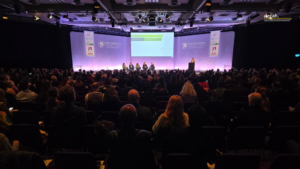
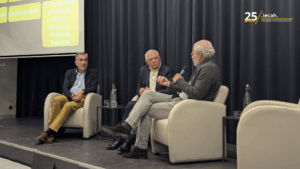
Two recent dialogues -the 2026 Humanitarian Finance Summit and a cross‑sector exchange convened by ERICC and ODI , London 25th and 26th February- offer complementary insights into how the sector can adapt.
Taken together, they point toward a shared conclusion: meaningful impact in protracted crises requires both a redesigned financing architecture and a more systemic approach to supporting national institutions and local actors.
A Sector Under Strain: Financial Pressures and Legitimacy Gaps
Across actors at the Humanitarian Finance Summit, a consistent message emerged: the humanitarian financing model is over‑dependent on a narrow group of OECD donors, leaving the system exposed to political cycles, budget volatility and shifting domestic priorities. Funding shortfalls began well before 2025, and the contraction now underway reflects structural fragility, not cyclical fluctuations.
This financial strain is coupled with a growing legitimacy challenge. In many crisis‑affected settings, communities question whether humanitarian action is sufficiently adaptive, accountable or aligned with their priorities.
A decade after the Grand Bargain, progress on localization and power‑shifting remains very limited. This lack of results reinforces perceptions of misalignment between aid structures and the realities of contemporary crises, which are predominantly long‑term, recurrent and intertwined with governance and development deficits.
Trust and Ownership in g7+ Settings. In many g7+ countries, public perceptions of aid diverge from fiscal realities. Populations may receive significant external funds directly, even when this is not the case. This undermines trust and can skew incentives toward short-term disbursement rather than institutional capacity-building. The dialogue emphasized that reforms must be relational, not merely technocratic: predictability, shared vision and mutual trust are essential.
Rethinking Aid in Protracted Crises: System-Level Approaches
Insights from the ERICC–ODI discussions underscore that traditional, projectized, yearly aid often falls short in protracted and politically complex environments. As crises extend beyond two decades, the limitations of short-term humanitarian models become increasingly apparent.
- Toward a More Coherent Financing Architecture: both events highlighted the need for a fundamental redesign of how humanitarian and development finance is structured.
- Aligning Incentives and Reducing Fragmentation: stakeholders stressed the importance of reducing duplication across donors, UN agencies, financial institutions and NGOs. Fragmented instruments—however innovative—cannot compensate for misaligned incentives or parallel systems
- Embedding Risk-Sharing: today’s financing structures often place disproportionate risk on implementing agencies and local actors. A future model requires structured risk management, not risk avoidance, and incentives for longer-term engagement.
- Connecting Humanitarian Finance to Broader Capital Markets: instruments such as insurance, risk pools and blended finance have potential, particularly in the humanitarian‑development nexus. Yet uptake remains limited due to technical capacity gaps and the complexity of designing fit‑for‑purpose tools.
- Loans, Grants and Pooled Funding: dialogue participants emphasized that development bank loans can increase fiscal strain in fragile contexts, reinforcing the case for greater use of grants. Aligned pooled funds – anchored in national systems but with clear conditionalities – offer a middle path between fragmented project aid and broad budget support, with potential to enhance coherence and institutional performance.
Emerging Approaches:
Several financing innovations are gaining traction:
- Anticipatory action requires integrated early warning, pre‑arranged financing and risk‑transfer mechanisms, rather than standalone pilots.
- Outcome-based funding reflects demand for results‑driven approaches, though design challenges remain around equity and incentives.
- Local enterprise support and impact investment can strengthen resilience in displacement-affected markets, complementing but not replacing humanitarian assistance.
Across these models, interoperability between humanitarian, development and financial actors remains a central barrier.
Examples of incipient Shifts: UNHCR and the World Bank Group
Recent moves by international institutions reflect a broader pivot toward system-level engagement.
- UNHCR is increasingly focused on inclusion of refugees within national systems rather than parallel structures, acknowledging that most displaced people reside outside camps.
- The World Bank Group’s renewed FCV strategy emphasises anticipatory engagement, differentiated approaches and reliance on government-led delivery platforms, with institutional capacity-building at its core.
Conclusion: Toward a More Sustainable, Locally Anchored System
Across both global discussions, several converging principles emerged:
- Flexibility paired with domestic ownership is essential in protracted crises.
- Sustained investment in local expertise reduces reliance on external technical assistance.
- Aligned pooled funds and risk‑sharing models can help bridge the humanitarian‑development divide.
- Systemic learning and early engagement with local actors are critical for relevance and legitimacy.
From IECAH’S perspective, a few questions arise. First, many of the mechanisms currently being promoted place greater expectations on local actors and national authorities—yet in conflict‑affected contexts, states often lack the capacity, coherence or political will to work with all civilians, and certainly not at the scale these reforms would require. In some settings, public institutions are contested, politicized or fragmented; in others, communities rely more on informal or non‑state structures than on government services.
Second, strengthening national systems is vital, but we should be cautious about assuming they can absorb responsibility without adequate support or that they will necessarily remain neutral and inclusive during conflict. As the sector strives to “do less, but do it better,” we must ensure that the push for efficiency does not unintentionally shift pressure and risk downward—onto local actors who are already overstretched—and that reforms remain grounded in realistic assessments of state capacity, community needs and the political dynamics that shape crisis response.
Only then can humanitarian action contribute meaningfully to resilience and protection in protracted crises.