IECAH participates in the International Humanitarian Studies Association (IHSA) conference with a panel on the Triple Nexus

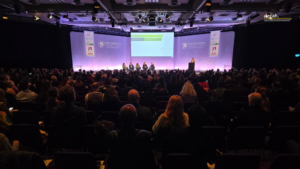
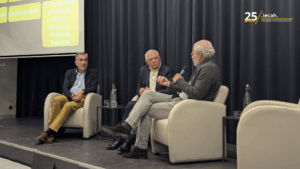
The Institute for Studies on Conflicts and Humanitarian Action (IECAH) took part in the eighth International Humanitarian Studies Association (IHSA) conference, held in Istanbul and Bergen, moderating the panel “Beyond Integration: Revisiting the Triple Humanitarian–Development–Peace (HDP) Nexus in Practice.”
The panel aimed to analyze the practical and political evolution of the Triple Nexus approach within the current context of international aid, marked by financial constraints and growing humanitarian needs. Discussions focused on the application of nexus principles in specific contexts, the governance and financing structures that shape cross-sector collaboration, and the role of local actors in adapting or questioning nexus-based frameworks. The debate also addressed how changes in the aid landscape are redefining the relevance and feasibility of this approach, as well as the political, institutional, and operational factors that enable or limit integration across the three pillars.
The panel, which featured representatives from theInternational Institute of Social Studies (ISS) de la Erasmus University Rotterdam, CEIPAZ, Van Hall Larenstein University of Applied Sciences, Utrech University y Peacebuilding and Collaborative Diplomacy (P&CD) Consulting, presented several studies offering new conceptual and methodological perspectives on the implementation of the Triple Nexus approach. The presentations included an operational typology classifying different modalities of nexus implementation according to their level of integration and context sensitivity, as well as proposals to strengthen the peace dimension through collaborative approaches, conflict-, age-, and gender-sensitive analyses, and greater coherence between financing and coordination mechanisms led by local actors.
The discussion also explored the convergence between the Women, Peace and Security (WPS) agenda and the Triple Nexus, emphasizing the prevention of gender-based violence, meaningful participation of women, and the strengthening of local capacities for peace. Finally, participants reflected on the development of analytical tools to assess how the nexus approach is integrated into humanitarian planning frameworks and the persistent gaps between its theoretical formulation and practical implementation.
The panel highlighted the importance of learning from field experiences and fostering more collaborative cooperation between local and international actors. In line with the Institute’s mission, the debate reaffirmed the need for humanitarian action that not only responds to crises but also contributes to peace and sustainable development.